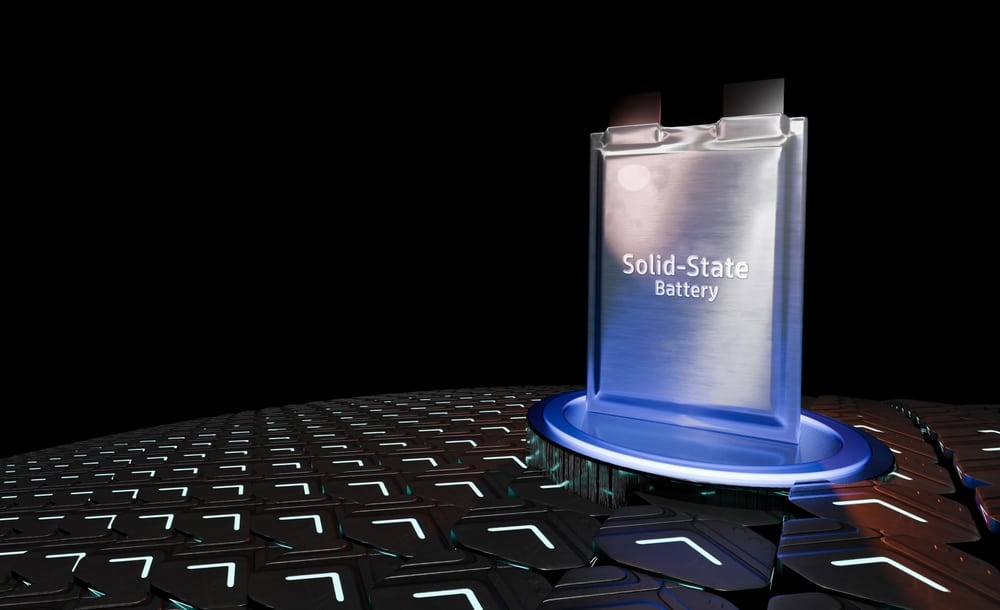
Nobody enjoys waiting for a battery. Whether you are watching an electric car crawl through a charging session or carrying a phone that fades before dinner. Our devices demand energy faster. Solid-state batteries could change that. By replacing the flammable liquid inside conventional lithium-ion cells with a solid material, developers hope to produce batteries that charge faster, store more energy and present a lower fire risk.
The possibilities are real, but so are the obstacles. Promising laboratory results do not yet equal affordable batteries rolling off production lines by the millions. Here is what the technology could fix, how it works and why the battery revolution keeps taking longer than the headlines suggest.
The Battery Part You Never See
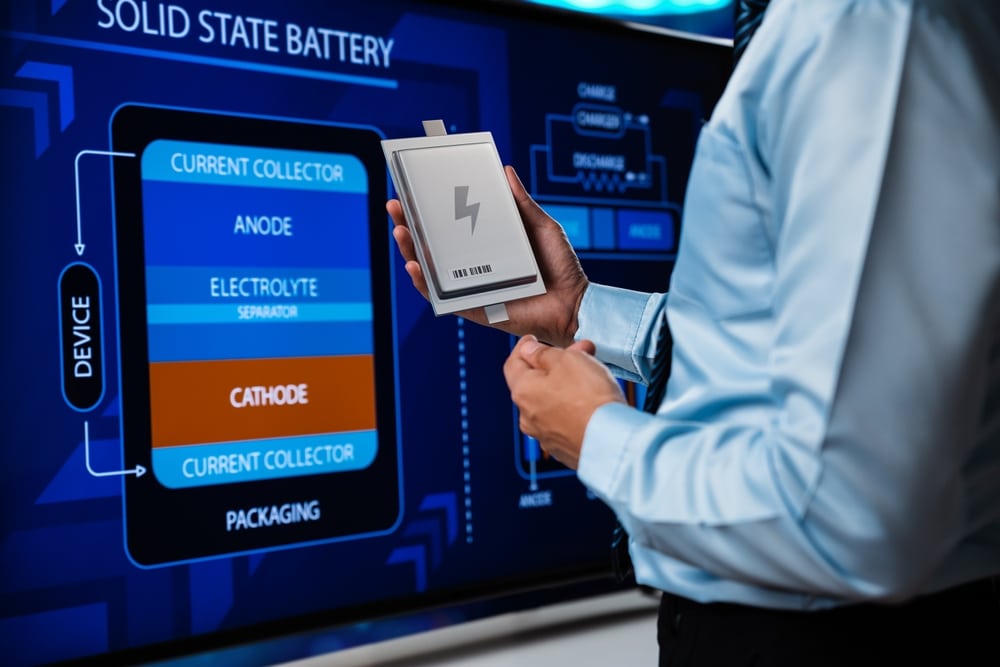
Every rechargeable lithium-ion battery contains two electrodes: a cathode and an anode. When the battery charges or powers a device, lithium ions move between them through an electrolyte.
In most batteries used in phones, laptops and electric vehicles, that electrolyte is a liquid or gel containing lithium salts. It conducts ions effectively, but it is also volatile and typically flammable. Manufacturers must include separators, cooling systems and electronic controls to keep the battery within safe limits.
A solid-state battery replaces that liquid electrolyte—and often the conventional separator—with a solid material. Depending on the design, the electrolyte may be ceramic, glass-like, polymer-based or made from sulfides, oxides or halides.
The phrase “solid-state” therefore describes a broad family of technologies rather than one settled battery recipe. Two companies can both claim to be developing solid-state cells while using very different materials, electrodes and manufacturing methods.
Some products described as semi-solid or hybrid batteries still contain a small amount of liquid. They may offer useful improvements, but they are not the same as an all-solid-state cell.
The Thing You Hate Most: Waiting to Charge
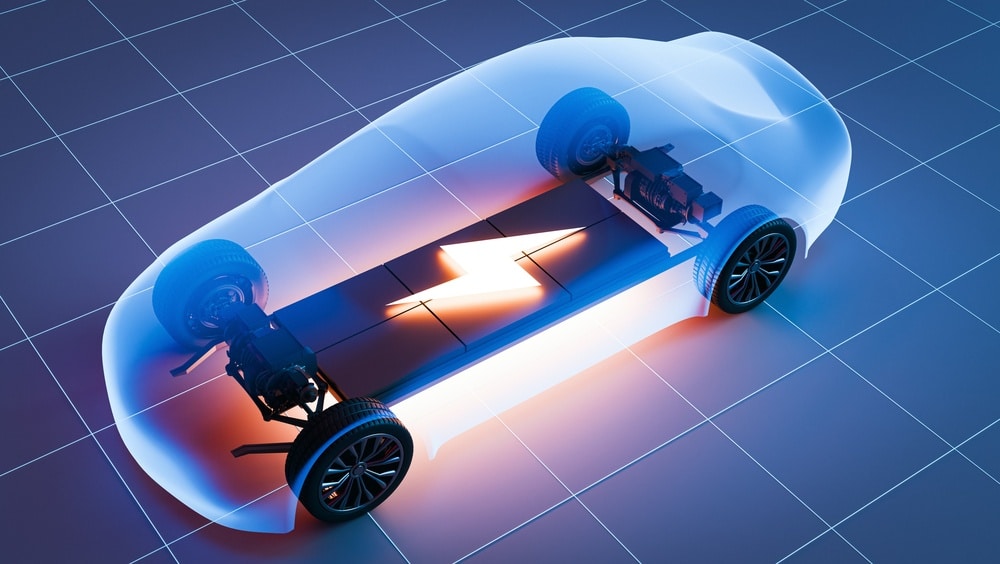
Fast charging is where the technology could make the most obvious difference to everyday life.
Conventional lithium-ion batteries cannot simply accept unlimited power. Charging too aggressively produces heat and can encourage unwanted lithium deposits to form inside the cell. Battery-management software therefore reduces the charging rate as the battery fills, which is why the final 20 percent often takes disproportionately long.
Several solid-state designs could allow lithium ions to move quickly without relying on a liquid electrolyte. They may also support lithium-metal anodes, eliminating a bottleneck created by the graphite anodes used in many current batteries.
Toyota has said it is targeting a charge from 10 to 80 percent in ten minutes or less for an early all-solid-state EV battery. The company is aiming for commercial use around 2027 or 2028, followed by larger-scale production. Those remain development goals, not specifications for a vehicle available to buy today. Toyota’s technical overview of its planned batteries makes that distinction important.
QuantumScape, another prominent developer, has reported prototype cells completing repeated 10-to-80-percent charging tests in about 15 minutes. Its planned design uses a ceramic separator and forms a lithium-metal anode during charging.
Research continues to move the numbers forward. A 2025 study published in Nature Communications demonstrated an experimental solid-state full cell retaining much of its energy capacity with charging times below ten minutes. Such results are encouraging, but a laboratory cell is not a finished battery pack that has survived years of vibration, winter mornings, summer heat and thousands of roadside charging sessions.
More Range Without a Larger Battery Pack
Faster charging is only part of the appeal. Solid-state cells could also store more energy for their weight and volume.
A conventional lithium-ion battery usually stores lithium in a graphite-based anode. Lithium metal can store far more charge in the same amount of space, but using it safely with a liquid electrolyte is difficult. A suitable solid electrolyte could make a lithium-metal anode more practical.
Higher energy density would give manufacturers several choices. An electric car could travel farther with a battery pack of roughly similar size. Alternatively, it could keep its current range while using a smaller, lighter pack. That second option is less exciting in an advertisement, but it could improve efficiency, handling and material use.
Phones and laptops could benefit in the same way. A manufacturer might offer longer battery life, or it might use the saved space for cameras, cooling hardware or a thinner body. Better battery technology does not guarantee that every company will hand the entire improvement to the user as extra runtime.
Range claims also need careful reading. A vehicle’s efficiency depends on its weight, shape, tyres, motors, climate controls and software as well as its battery. When an automaker announces a dramatic future range, some of that improvement may come from changes elsewhere in the car.
A Battery That Is Harder to Set on Fire
Removing a flammable liquid electrolyte could improve safety. Certain solid electrolytes are nonflammable and remain stable at temperatures that would create problems for conventional cells.
That does not make solid-state batteries incapable of failing. The electrodes still store substantial energy, and a damaged or defective pack could overheat or short-circuit. Some sulfide electrolytes can also react with moisture and release toxic hydrogen sulfide gas, creating additional challenges during manufacturing and recycling.
The safety argument is therefore more precise than “solid batteries cannot burn.” A well-designed solid-state cell could reduce important causes of fire and slow the spread of thermal failure. Its exact behaviour will depend on the chemistry, pack design and damage involved.
Safer cells could allow manufacturers to reduce some protective packaging and cooling equipment. That would create further weight and space savings, although regulators and automakers will need extensive crash and abuse testing before making those changes.
Why Is This So Difficult?
Liquid has one useful property: it flows. It can maintain contact with the rough surfaces inside a battery as the materials expand and contract.
Solid layers are less forgiving. Tiny gaps can form where the electrolyte meets an electrode. These gaps interrupt the movement of ions, increase resistance and reduce performance. Charging and discharging can worsen the problem as electrode materials repeatedly change volume.
Manufacturers may apply pressure to keep the layers together, but a heavy compression system is not an attractive addition to an electric car or phone. Researchers are consequently working on interfaces and materials that can remain in contact without impractical external pressure.
Dendrites present another major challenge. These narrow lithium structures can grow through defects, cracks or grain boundaries and eventually cause a short circuit. A solid electrolyte sounds like an impenetrable wall, but research has shown that lithium can exploit surprisingly small weaknesses.
A 2025 Nature Energy study described dendrite penetration at useful charging rates as a substantial challenge for major solid-electrolyte families. Researchers were able to reach much higher currents by carefully controlling the density and microstructure of a sulfide electrolyte, showing both the potential and the precision required. The published research on dendrite-resistant charging is a good reminder that the word “solid” does not automatically solve the problem.
Building One Cell Is Not the Same as Building a Million
Battery announcements often focus on a successful prototype. Commercial production introduces a different list of problems.
Electrolyte layers must be thin, consistent and almost free from defects. The electrodes and electrolyte must be stacked or wound rapidly without cracking. Moisture-sensitive materials may require tightly controlled factory environments. Every stage must produce a high percentage of usable cells, because a poor manufacturing yield quickly makes the final battery unaffordable.
Cells must then be assembled into modules and packs, integrated with cooling and control systems, crash-tested and validated over years of expected use. A carmaker also needs reliable suppliers capable of delivering materials at enormous scale.
This is why an announced “commercialisation” date may refer to a limited production run rather than immediate use across a company’s entire range. Toyota and Idemitsu, for example, have outlined multiple phases beginning with pilot production of sulfide electrolytes before moving towards full-scale manufacturing. Their joint production plan still places mass-production development after the initial planned launch.
Early solid-state batteries are likely to appear in expensive or specialised vehicles where high performance can justify the cost. They may take considerably longer to reach affordable family cars.
They Will Not Fix Every Charging Problem
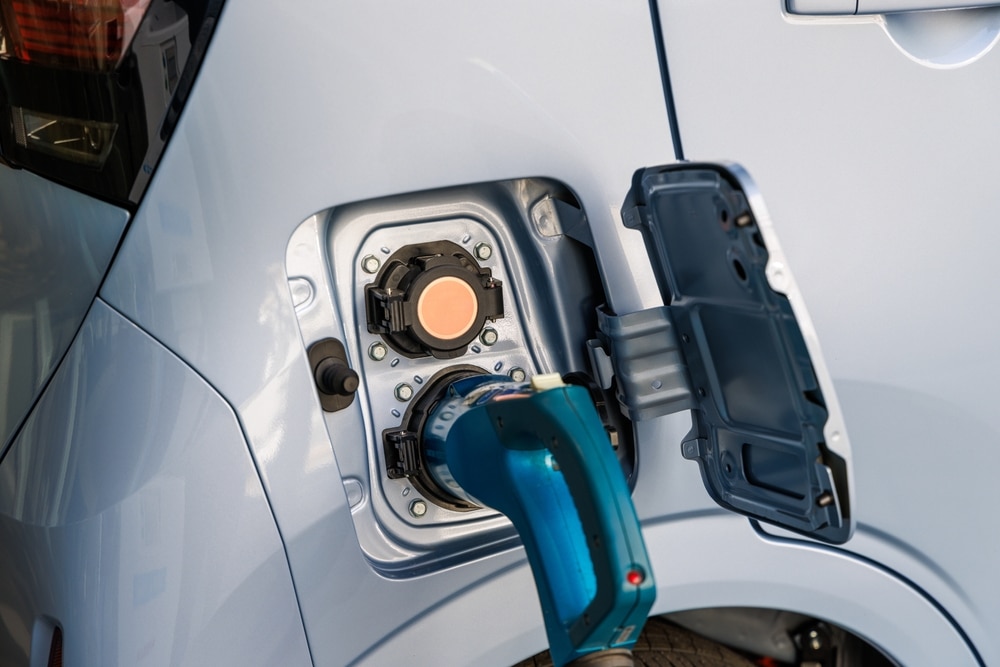
Even a battery capable of charging in ten minutes still needs a charger powerful enough to deliver the required electricity.
Charging speed is determined by the vehicle, battery temperature, cable, charging station and available grid connection. A solid-state car connected to a slow home charger will still charge slowly. At a public station, it may share power with another vehicle or encounter hardware that cannot provide its maximum rate.
Faster charging also concentrates demand. If several vehicles each draw exceptionally high power, the charging site needs a strong electrical connection and effective energy management.
Solid-state batteries therefore cannot repair broken chargers, remove queues or install infrastructure in rural areas. They may make each successful stop shorter, but charging networks must improve alongside them.
Nor will every driver require the fastest possible session. Overnight home charging places less pressure on the battery and grid. Ten-minute charging matters most for long journeys, commercial fleets and people without access to a private charging point.
What About Phones and Laptops?
Small devices appear to be an obvious first market because they need less battery material than cars. Solid-state cells already exist in specialised applications, including small medical and industrial products.
Scaling a technology down does not automatically make it suitable for a smartphone, however. Consumer-electronics batteries must be extremely thin, inexpensive and capable of surviving frequent full charges. A modest increase in cost multiplied across millions of devices can become a serious barrier.
Solid-state designs may first appear in wearables, premium phones or devices where safety and compact size justify a higher price. The biggest benefit might not be a five-minute charge. It could be a phone that retains useful capacity for more years or fits more energy into the same internal space.
Consumers should also be sceptical of products using “solid-state” as a vague marketing term. Useful questions include whether the cell is fully solid or hybrid, how many cycles it has completed, what pressure and temperature the tests required and whether the figures come from a complete commercial-size cell.
The Environmental Picture Is Complicated
More energy-dense cells could reduce the amount of material needed for a given range. Longer service life would also lower the frequency of battery replacement.
Yet solid-state technology does not eliminate lithium mining, energy-intensive manufacturing or the need for recycling. Some designs use nickel, cobalt or scarce specialist materials; others may eventually reduce dependence on them. The impact will vary by chemistry.
Recycling processes built around today’s lithium-ion batteries may need modification for new electrolytes and lithium-metal designs. Planning for that transition before enormous production volumes arrive will be essential.
The US Department of Energy has funded projects aimed specifically at moving solid-state research into large-format, high-volume manufacturing. Its manufacturing programme highlights the central issue: laboratory performance is only one part of making the technology useful.
A Real Breakthrough—Just Not an Instant One
Solid-state batteries have a credible route towards shorter charging stops, longer range and improved safety. The science has advanced beyond a single miraculous experiment, and manufacturers are now building pilot processes rather than merely discussing theoretical materials.
The remaining challenge is turning carefully prepared prototypes into durable, affordable cells at industrial scale. Production targets around the end of the decade are plausible, but early volumes may be limited and timelines can still slip.
The technology could finally reduce the battery wait everyone dislikes. It will not happen through one dramatic launch, and it will not make today’s charging infrastructure irrelevant. Expect a gradual arrival: first in selected vehicles and premium devices, then more widely if factories can deliver the performance promised in the laboratory.