
It rarely happens all at once. There is no final post, no explanation, no visible break. Someone who used to be active online simply fades out—posting less, engaging less, and eventually disappearing altogether. In isolation, it barely registers. But when the same pattern repeats across friends, creators, and entire circles, it becomes harder to ignore. Something is shifting.
More people are choosing to step away from constant connectivity, not as a dramatic rejection of technology, but as a deliberate adjustment. This shift is closely tied to the rise of digital minimalism, a mindset that prioritizes intentional use of technology over habitual consumption. Rather than asking how to stay more connected, people are beginning to ask a different question: what is actually worth staying connected to?
The Silent Trend No One’s Talking About
Unlike previous waves of “digital detox” culture, this movement is largely invisible. It does not rely on public declarations or shared milestones. Instead, it unfolds quietly. Apps are removed without announcement, notifications are disabled, and platforms that once filled daily routines gradually lose their place.
This lack of visibility is precisely what makes the trend significant. It is not driven by social signaling or collective momentum, but by individual decisions made in private. People are no longer stepping away to make a point—they are stepping away because the value proposition of constant engagement has become less convincing.
In this context, digital minimalism functions less as a trend and more as a framework. It gives structure to a decision many people were already approaching intuitively: reducing digital noise in order to regain a sense of control.
What Is Digital Minimalism (Really)?
At its core, digital minimalism is not about abstaining from technology, but about redefining its role. It challenges the assumption that more access, more platforms, and more content automatically lead to a better experience. Instead, it emphasizes selectivity.
This selectivity is practical rather than ideological. It involves identifying which tools genuinely support daily life—whether for communication, work, or information—and removing those that operate primarily as distractions. The result is not disconnection, but refinement.
What distinguishes digital minimalism from earlier approaches is its sustainability. It does not rely on temporary resets or strict limitations. It encourages a stable balance in which technology remains useful, but no longer dominates attention.
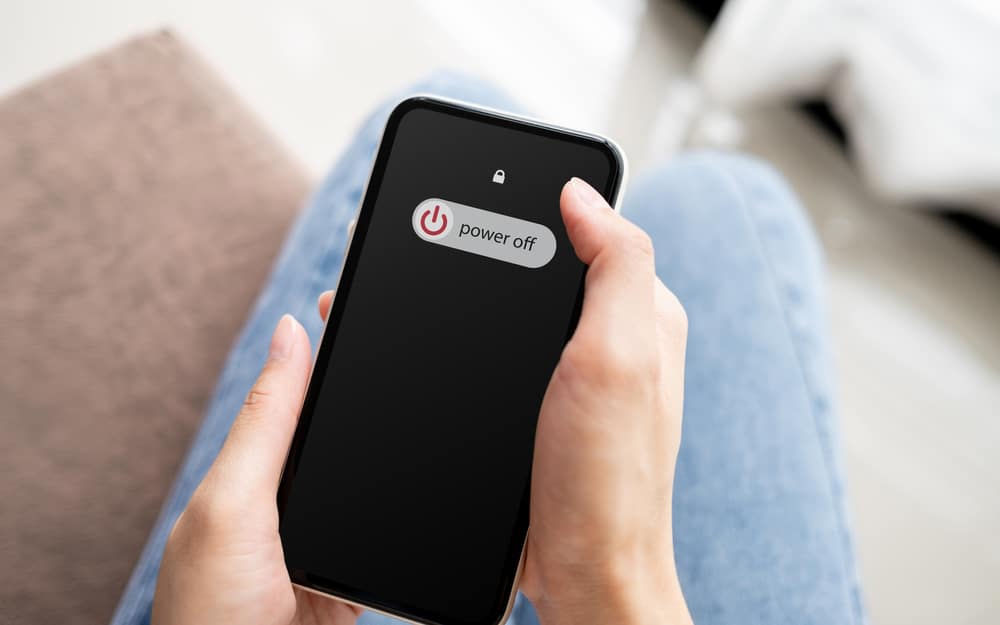
Why People Are Quietly Logging Off
One of the most immediate drivers behind this shift is cognitive overload. The modern digital environment is designed to capture and retain attention, often through continuous streams of notifications and algorithmically curated content. While effective, this design creates a persistent background demand on mental resources.
Over time, that demand accumulates. Even when engagement feels passive, the constant exposure to new information fragments attention and reduces the ability to focus deeply. Many users do not recognize this effect immediately, but they experience its consequences in the form of fatigue, distraction, and reduced clarity.
At the same time, the nature of online platforms has changed. Social media, in particular, has moved away from interpersonal interaction toward content distribution. Feeds are no longer shaped primarily by relationships, but by engagement metrics. This shift alters the experience from participation to consumption, often without users consciously noticing the transition.
As a result, the perceived value of staying constantly connected begins to decline. What once felt essential starts to feel optional. For many, this realization marks the point where digital minimalism becomes not just appealing, but necessary.
Privacy considerations further reinforce this shift. Increased awareness of data collection and tracking has made users more conscious of their digital footprint. While not always the primary motivation, this awareness contributes to a broader sense that online participation involves trade-offs that were previously overlooked.
However, the most tangible factor remains time. When people begin to account for how much of their day is spent interacting with screens, the numbers are often difficult to justify. This realization tends to be decisive. Unlike abstract concerns about algorithms or privacy, time is immediate and measurable. Once its loss becomes visible, reclaiming it becomes a priority.
The “Quiet Exit” vs the “Loud Quit”
The distinction between a public departure and a quiet disengagement reflects a deeper change in how people approach their digital lives. A public exit remains embedded within the same system it seeks to leave. It invites response, creates visibility, and often maintains a connection to the platform through discussion and reaction.

A quiet exit removes these elements entirely. By disengaging without announcement, individuals avoid the social dynamics that can complicate or undermine their decision. There is no expectation to return, no need to justify the change, and no residual attachment to the platform’s feedback loop.
This approach aligns closely with the principles of digital minimalism, where the focus is internal rather than external. The objective is not to signal a choice, but to implement it effectively. In practice, this makes the transition more durable, as it is not dependent on external validation.
What Happens After People Log Off?
The initial phase of disengagement is often defined by habit disruption. Behaviors that were previously automatic—checking notifications, opening apps, scrolling through feeds—continue to surface even after the platforms themselves are no longer present. This creates a short period of adjustment in which the absence of stimulation feels unfamiliar.
As this phase passes, the effects become more pronounced. Without constant interruptions, attention stabilizes. Tasks that previously felt fragmented become easier to complete, and periods of rest are less likely to be interrupted by digital input. These changes are subtle at first, but they accumulate over time.
Another notable effect is the reduction of passive comparison. Without continuous exposure to curated representations of other people’s lives, the tendency to measure oneself against external standards diminishes. This does not eliminate comparison entirely, but it reduces its frequency and intensity.
In this stage, digital minimalism becomes less about removal and more about replacement. The space created by reduced digital engagement is filled with other forms of activity—whether productive, social, or simply restorative. The shift is not defined by what is missing, but by what becomes possible in its absence.
Is This a Trend—or a Shift?
While it may appear as a temporary response to digital fatigue, the movement toward digital minimalism is better understood as part of a broader behavioral adjustment. Similar patterns can be observed in other areas, where excess is gradually being replaced by selectivity.
This shift is not driven by rejection, but by recalibration. Technology remains central to daily life, but its role is being renegotiated. Instead of accepting constant connectivity as a default, people are beginning to treat it as a variable.
The fact that this change is occurring among individuals who have grown up with digital platforms suggests that it is not simply a reaction to novelty wearing off. It indicates a deeper recognition that the current model of engagement is not inherently optimal.
Signs You Might Be Ready for Digital Minimalism
The transition toward digital minimalism rarely begins with a single decisive moment. More often, it develops through a series of observations that gradually converge. A sense of diminished focus, a growing awareness of time spent online, or a persistent feeling of mental clutter can all contribute to this shift.
These signals do not necessarily indicate a problem in isolation. However, when they appear consistently, they suggest that existing habits may no longer align with personal priorities. At that point, reducing digital input becomes less about restriction and more about alignment.
How People Are Doing It (Without Going Extreme)
The practical application of digital minimalism is typically incremental. Rather than attempting a complete overhaul, individuals make targeted adjustments based on their own usage patterns. This might involve removing specific apps that provide little value, limiting access during certain parts of the day, or restructuring how and when information is consumed.
What makes this approach effective is its adaptability. There is no fixed model to follow, which allows individuals to refine their habits over time. Small changes create measurable differences, and those differences reinforce further adjustments.
As a result, the process becomes self-sustaining. Each improvement in clarity or focus provides a clear incentive to continue, making digital minimalism a practical long-term strategy rather than a temporary intervention.
The Future: Will More People Log Off?
As digital environments continue to expand, the competition for attention will intensify. More content, more platforms, and more notifications will increase the baseline level of engagement expected from users. In this context, the ability to regulate attention becomes increasingly valuable.
Digital minimalism offers a framework for doing exactly that. It does not attempt to reduce the scale of the digital world, but to redefine how individuals interact with it. This distinction is important, as it allows for continued participation without passive overexposure.
It is unlikely that large numbers of people will abandon digital platforms entirely. However, it is increasingly likely that they will engage with them more selectively. For some, this will involve minor adjustments. For others, it will lead to a more substantial withdrawal.
Quiet Log Off
The quiet disappearance of users from digital platforms is not an anomaly. It is a reflection of changing priorities. As the costs of constant connectivity become more visible, the benefits of stepping back become easier to justify.
Digital minimalism provides a structured way to navigate this shift. It does not demand disconnection, but it does require intention. By focusing on what is genuinely useful and removing what is not, individuals can regain control over their time and attention.
For those who have already made this adjustment, the absence of constant engagement is not experienced as a loss. It is experienced as a correction. And once that correction is made, returning to previous habits often no longer feels necessary.