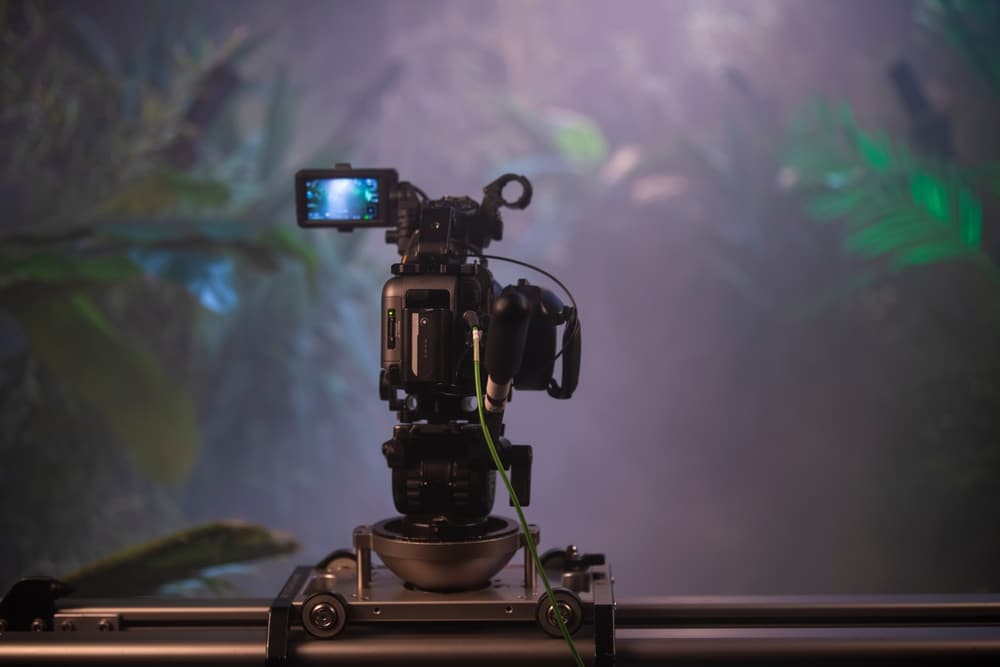
A camera pointed at an empty forest path. A slow-moving river at dusk. A rainy window in an unnamed city. Nothing happens. Nobody speaks. Nothing changes, except the light shifting imperceptibly from one moment to the next.
And yet, millions of people are watching.
The rise of nothing happens videos is one of the most quietly remarkable phenomena of the current internet age. At a time when content is engineered to be louder, faster, and more stimulating than ever before, a significant and growing portion of online audiences is actively seeking out the opposite: footage in which, by design, absolutely nothing of note occurs.
This is not an accident. It is not a niche. And it is most certainly not boring — at least, not in the way we usually mean that word.
What Are ‘Nothing Happens’ Videos?
Before exploring the why, it helps to define the what. Nothing happens videos is a loose umbrella term for a category of online content defined not by what occurs in the footage, but by what conspicuously does not.
These videos typically share a few common characteristics. They are long — often several hours, sometimes running 24 hours or more in a continuous loop. They feature minimal or zero human activity. They are almost always unedited, without cuts or transitions. They rarely contain music, relying instead on ambient sound: rain, wind, birdsong, distant traffic, fire crackling, water flowing.
Examples include:
A fireplace burning in real time, with no music or narration. A live stream from a bird feeder in rural Norway. A fixed camera trained on a field in Scotland where deer may or may not eventually appear. A ten-hour video of a log cabin window in winter, snow falling in near silence. A continuous shot of a Japanese train station at 3am.
The defining feature in every case is the same: the implicit and usually explicit promise that nothing of significance will happen. That is, in itself, the point.

The Origins of the Nothing Happens Video
While the format has exploded in recent years, its roots run deeper than the algorithm. The concept draws on a surprisingly rich lineage.
Slow TV is perhaps the most direct ancestor. The Norwegian public broadcaster NRK pioneered the genre in 2009 with an uninterrupted seven-hour broadcast of a train journey from Bergen to Oslo. The broadcast drew extraordinary ratings — nearly a quarter of the Norwegian population watched at least part of it — and spawned a series of equally uneventful follow-ups: a twelve-hour live salmon fishing program, an eighteen-hour knitting marathon, and a 134-hour voyage along the Norwegian coastline.
The message from Norwegian audiences was clear: there was an enormous appetite for content that asked nothing of the viewer.
Japanese lo-fi streams contributed another strand of the genre’s DNA, blending ambient visuals with unobtrusive music (or none at all) as a backdrop for study, work, or sleep. The lo-fi hip-hop girl at her desk, rain tapping the window — a now-iconic image — became a global phenomenon precisely because it occupied the visual periphery without demanding attention.
ASMR content, while not identical to nothing happens videos, overlaps significantly. Both formats prioritize sensory experience over narrative, and both attracted audiences seeking relaxation, focus, or the simple comfort of a quiet presence.
Why Are Nothing Happens Videos Exploding Right Now?
The timing of this trend is not incidental. Understanding why nothing happens videos have surged in popularity requires looking honestly at what the rest of the internet has become.
The Attention Economy Has Reached a Breaking Point
The dominant logic of online content for the past decade has been escalation. More stimulation, more conflict, more novelty, faster cuts, louder thumbnails, higher emotional stakes. Algorithms reward content that captures attention; creators respond by making content that is harder and harder to look away from.
The result is an internet that is exhausting to inhabit. The average person now encounters hundreds of pieces of content per day designed specifically to provoke, hook, or agitate. Scroll fatigue is real, and for many people, chronic.
Nothing happens videos are a direct counter-response to this environment. They do not compete for attention. They do not try to win a click or hold an eyeball hostage. They simply exist, in long, unhurried form, offering the viewer an opt-out from the relentlessness of everything else.
The Psychological Case for Boredom
There is growing evidence in psychology that boredom — real, unstimulated boredom — is not just unpleasant but cognitively necessary. Research suggests that the brain’s default mode network, which activates during periods of low external stimulation, is associated with creativity, self-reflection, memory consolidation, and emotional regulation.
In a world where every spare moment is filled by a screen, opportunities for genuine mental rest are vanishingly rare. Nothing happens videos create a deliberate space for low-stimulation experience — not quite boredom, but close enough to allow the mind to wander productively.
This may explain why so many viewers report using these videos not as entertainment in the conventional sense, but as a kind of background support for other activities: studying, working, falling asleep, eating alone, or simply existing in a space where the screen is on but not demanding.
Ambient Media and the Screen as a Hearth
There is an older cultural precedent for what nothing happens videos are doing. For centuries, humans gathered around fires. The fire was not a performance. It did not have a plot or a resolution. It simply burned, offering warmth, light, and a focal point for the wandering gaze. The hearth was the original ambient medium.
Television partially filled this role — background noise in homes across the world — but commercial television is still fundamentally attention-seeking. Nothing happens videos have more in common with the fire than with the TV show. They offer presence without demand.
Streaming platforms have recognized this. Netflix released a fireplace video years ago that became one of its most-watched pieces of content during the holiday season. YouTube’s ambient channel ecosystem has grown substantially. Dedicated apps for ambient and nothing happens content have found real audiences.
Pandemic Legacy and the Need for Stillness
The COVID-19 pandemic accelerated many pre-existing behavioral trends, and the appetite for nothing happens videos was one of them. Housebound, anxious, and overstimulated by news cycles, many people turned to ambient content as a form of psychological regulation.

That habit has proved stickier than many expected. Even as pandemic restrictions lifted, the appetite for stillness in digital form did not dissipate. If anything, returning to busy social environments reinforced how valuable those quiet digital spaces had become.
The Communities Behind Nothing Happens Videos
This is not a passive phenomenon driven entirely by algorithm. Active communities have formed around the consumption and creation of nothing happens videos.
Subreddits dedicated to slow TV, ambient video, and comfort streams have grown substantially. Discord servers organize around specific themes — nature streams, fireplace hours, rain-on-window sessions. Creators have built substantial audiences by doing almost nothing on camera: a person sitting in a garden, a live feed from a lighthouse, an unmanned camera in a field.
The irony is that building a successful nothing happens channel requires considerable thought and craft. Camera placement, sound recording quality, lighting conditions, and the subtlety of what is — and isn’t — in frame all matter enormously. The best nothing happens videos feel artless; they are not.
There is also a community ritual dimension. Regular viewers of a particular stream develop attachment to the specific location, the quality of light at different times of year, the small cast of birds or animals that occasionally appear. The nothing that happens becomes, over time, a deeply familiar nothing.
The Creators: Who Makes These Videos and Why?
The ecosystem of nothing happens content creators is surprisingly diverse. Some are hobbyists who set up a camera in a location they love and leave it running. Some are professional streamers who recognized an underserved audience. Some are institutions — wildlife conservation organizations, railway companies, national parks — who found that long, unedited footage served both their audiences and their brand identities better than polished promotional content.
The economics are unconventional. A ten-hour video of falling snow generates watch time in extraordinary volume. Watch time is a primary signal for algorithmic recommendation on platforms like YouTube. This means that a single well-placed nothing happens video can generate passive income and audience reach far exceeding content that took significantly more effort to produce.
There is something pleasing about this inversion. The attention economy rewards frantic effort. The nothing happens economy rewards patience, location, and restraint.
Are Nothing Happens Videos a Form of Mindfulness?
The overlap between nothing happens videos and formal mindfulness practice is worth noting, even if it is imperfect.
Mindfulness, in its clinical sense, involves directing attention to the present moment without judgment. Nothing happens videos encourage a similar orientation: you are not watching for a plot development. You are not waiting for a reveal. You are simply watching what is there — light on water, wind in grass, the slow accumulation of snow — without expectation.
For many people, this functions as an accessible and low-barrier entry point into meditative states. No app subscription required, no guided instruction, no pressure to perform relaxation correctly. Just a screen, and whatever slow, quiet thing is happening on it.
Mental health professionals have begun to acknowledge the potential value of this kind of content for anxiety, insomnia, and stress recovery — while also noting that no video, however peaceful, substitutes for professional support when it is needed.
What Nothing Happens Videos Tell Us About Ourselves
Perhaps the most interesting thing about the rise of nothing happens videos is what the trend reveals about collective psychological need.
We have built an information environment of extraordinary intensity, and we are discovering — somewhat urgently — that human beings were not designed for it. The brain that evolved tracking prey across a savanna is not well-suited to processing six hundred pieces of content before noon. Something has to give.
Nothing happens videos are, in this light, less a content trend and more a symptom. They are what happens when enough people decide, consciously or otherwise, that they need to look at something that will not look back.
In a content landscape built on provocation, the quiet video of a snowy field at 4am is a small act of resistance. And the fact that millions of people are choosing it, night after night, says something important about what we actually need from our screens — and how rarely we get it.