
Imagine picking up your next device and finding nothing but a smooth shell. No glass, no pixels, no distracting rectangle glowing back at you. That vision is moving from science fiction toward plausible reality thanks to rapid advancements in screenless technology. As companies race to create more compact, efficient, and immersive devices, the idea of a phone without a traditional screen suddenly seems far less outrageous.
Over the next decade, our interactions with mobile devices could shift toward voice, holograms, gestures, and neural interfaces. This article explores why the future of phones may leave physical displays behind entirely and what that transformation might mean for everyday life.
Why Screens Became a Limitation
For over a decade, smartphones have evolved mainly through bigger, brighter, and sharper displays. High refresh rates, folding glass, near-invisible bezels — these have defined innovation. But all of these improvements share a fundamental constraint: screens consume space, demand power, and limit design.
A thicker phone usually exists because of the battery required to power an always-on display. A phone’s fragility is largely due to the single sheet of glass dominating its exterior. And a screen’s rectangular shape determines nearly every aspect of a phone’s size and layout.
As apps and digital ecosystems grow, our phones are increasingly overworked windows rather than intuitive tools. The screen represents both the smartphone’s greatest strength and its biggest design bottleneck. That tension has pushed researchers and tech companies to explore new ways of delivering information without needing a glowing panel.

The Rise of Immersive Interfaces
As researchers push the boundaries of screenless technology, new forms of interaction are emerging that reimagine how we receive information. Voice assistants already give us hands-free access to data, but future phones may rely far less on text and icons.
Instead of tapping on static menus, users might rely on spatial audio cues, conversational interfaces, and projected visuals that appear only when needed. These interfaces could adapt in real time to the environment, providing context-aware prompts rather than requiring us to dig through layers of apps.
The long term goal is not to remove information, but to remove the rigid, glowing rectangle through which we’ve been forced to interpret it. By letting information float in three-dimensional space or speak to us naturally, the phone evolves into a more adaptive companion rather than a surface to stare at.
How Phones Without Screens Could Work
To understand how a phone without a traditional display might function, consider the technologies already emerging around us. Holographic projection, for instance, allows small devices to create floating images or text in mid-air. Although still imperfect, early prototypes show promising signs for a future shaped by screenless technology.
Another approach involves micro-LED projectors embedded in a phone’s frame. These can beam interfaces onto walls, tables, or even your own hand, giving you a functional display only when you need one. This method blurs the line between digital and physical space, shifting the phone’s output from internal hardware to any surface around you.
Gesture tracking systems add another layer to the experience. With them, users can swipe, pinch, or tap on projected interfaces as if they were real. The key is fluidity: when everything around you becomes a canvas, the need for a built-in display evaporates. It creates a natural endpoint for devices built around screenless technology — a phone that interacts with you rather than asks you to stare at it.

The Technologies Making It Possible
A major force behind this shift is machine learning, which enables phones to anticipate what you need at any moment. With stronger processors and smarter algorithms, devices can interpret voice, gestures, and surroundings with impressive accuracy. This intelligence is essential for screenless technology, where traditional visual menus are replaced by more adaptive inputs.
Augmented reality also plays a key supporting role. Rather than relying on headsets, many researchers envision ultralight glasses or even contact lenses capable of overlaying digital elements onto the real world. A phone could serve as the processor while using wearable optics to deliver the visuals.
Meanwhile, haptic feedback technology is evolving to mimic the sensation of physically pressing buttons or sliding controls in mid-air. Combined with advanced sensors, it creates a convincing sense of touch even when no screen exists. All of these innovations support ecosystems where screenless technology becomes the norm rather than the exception.
What Everyday Life Might Look Like
Imagine waking up and checking your messages not by unlocking a screen, but by hearing a soft audio summary and viewing floating notifications projected above your nightstand. This seamless integration reduces the habitual screen-staring that dominates modern mornings and instead uses screenless technology to present information only when it matters.
Throughout your day, your phone might project directions on the sidewalk as you walk, highlight items on your grocery list directly onto store shelves, or help you translate signs in real time by overlaying digital text into your field of vision. With screenless technology, the digital world blends into everyday routines rather than pulling you into a glowing display.
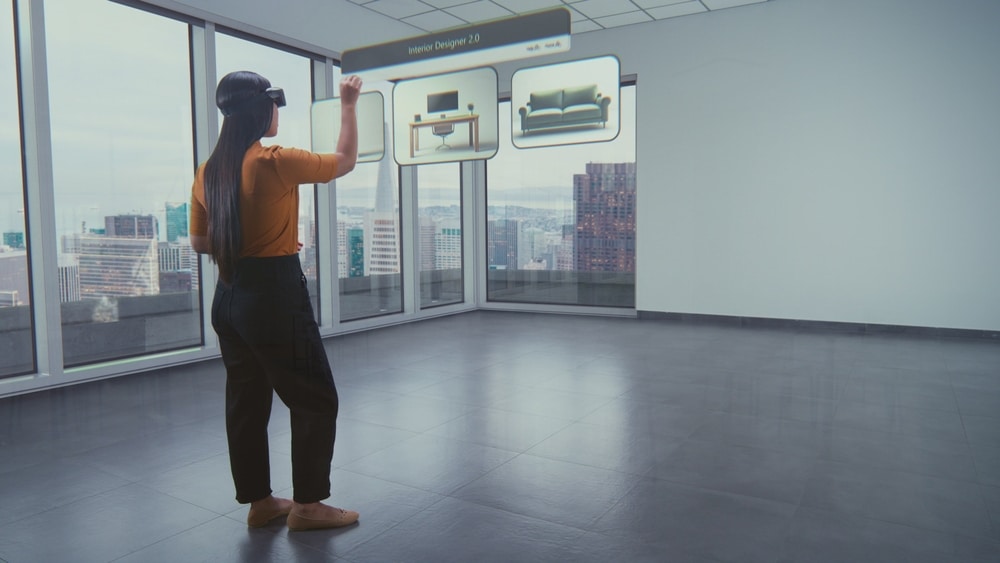
In social settings, phones could become far less intrusive. Instead of a group of people hunched over rectangular screens, a device might discreetly whisper updates through directional audio or show quick visuals only you can see. These subtle interactions could make technology feel more personal and less isolating.
The Challenges Ahead
Despite its promise, screenless technology faces major obstacles before it becomes mainstream. Battery life remains a major concern. Projectors, holographic modules, and advanced sensors can consume even more energy than traditional displays, making efficiency a critical design challenge.
Privacy is another hurdle. If a device relies on constant listening, scanning, or projecting, it must secure user data without compromising performance. Transparent processing, on-device AI, and clearer privacy standards will be essential to gaining consumer trust as screenless technology evolves.
Cost and accessibility also factor in. Early versions of any breakthrough tend to be expensive, experimental, and limited to niche markets. Only once these innovations scale will the average consumer consider ditching a tried-and-true smartphone screen for something radically different.
The leap toward phones without screens isn’t about removing features; it’s about removing limitations. As screenless technology matures, it pushes us to rethink what a phone truly is: not a glowing slab we carry everywhere, but a responsive companion that blends into our lives more naturally. The innovations behind this shift are still developing, but the trajectory is clear. Displays may eventually feel as outdated as flip antennas or physical keyboards once did.
If these trends continue, the devices of tomorrow will communicate through sound, light, and movement in ways that feel intuitive rather than distracting. Thanks to screenless technology, the future of mobile experience might be more immersive, more human, and far less tied to a rectangle in our pockets.
Do you want to learn more future tech? Than you will find the category page here