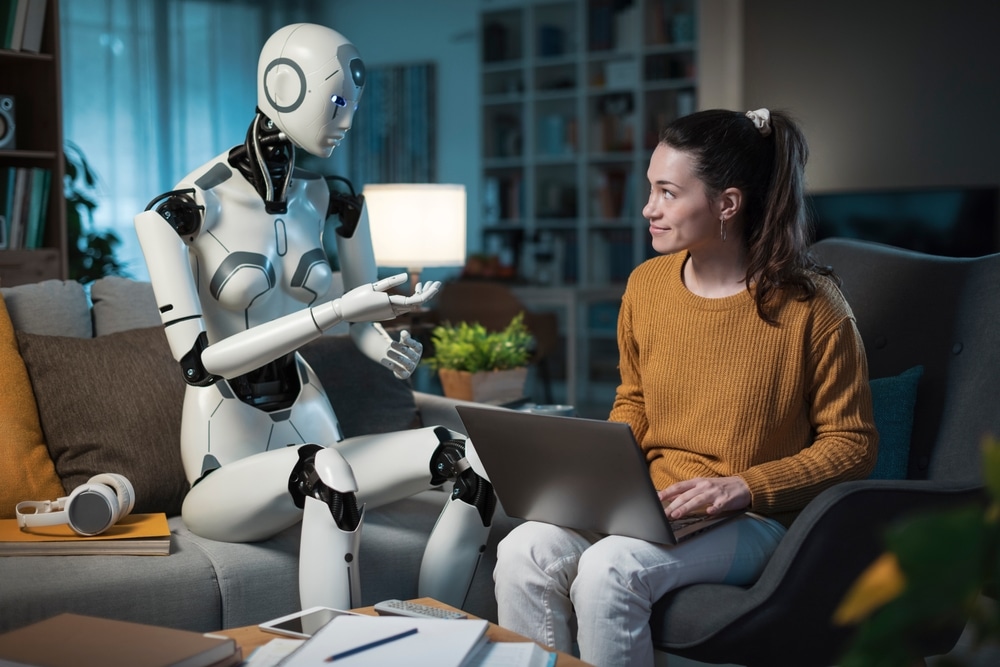
A truly smart space does more than react after you press a button. It notices patterns, learns timing, and quietly adjusts comfort before you ask. That idea sits at the heart of predictive environment AI, a growing approach to homes, offices, hotels, and public buildings that blends sensors, software, and automation. The goal is not to turn life into science fiction. It is to remove tiny points of friction that pile up across a day. Lights turn on at the right moment, temperature shifts before a room feels stuffy, and devices become less demanding. Good design starts to feel almost invisible.
The Promise of predictive environment AI
Most people already know reactive smart tech. A motion sensor sees movement and turns on a light. A thermostat notices the temperature has dropped and begins heating. That is useful, but it still responds after the fact. Predictive environment AI pushes the idea further by using data about occupancy, time, habits, weather, and device use to make better guesses about what should happen next. Instead of waiting for discomfort, the system tries to prevent it.
That may sound small, but small improvements matter because buildings shape nearly every hour of modern life. The International Energy Agency continues to emphasize how important efficiency improvements in buildings are for affordability, energy security, and emissions reduction. The U.S. Department of Energy also highlights sensors, controls, and occupant centered strategies as a key way to improve building performance. In plain English, smarter spaces are not just a luxury trick. They can make buildings cheaper to run and nicer to live in.

How Rooms Learn Your Routines
At its core, predictive environment AI depends on pattern recognition. It gathers signals from connected devices and sensors, then looks for repeat behavior. Maybe your kitchen lights usually come on around 6:30 a.m. on weekdays. Maybe your bedroom cools down every evening because you sleep better that way. Maybe your office meeting room fills up every Tuesday at the same time, even though nobody remembers to change the ventilation settings manually.
Over time, predictive environment AI can connect those dots. Occupancy sensors, for example, already help reduce wasted lighting by turning lights off or down when rooms are empty. The Department of Energy notes that these controls can bring meaningful savings, with possible lighting energy savings ranging widely depending on the space and how it is used. Add historical patterns and a system can do more than detect presence. It can estimate when a room is likely to be needed and prepare it in advance.
This is where the experience changes from gimmick to genuine usefulness. Nobody wakes up excited to manage a thermostat menu. Nobody feels personally fulfilled by adjusting blinds three times because the sun moved across the room. The more a system can handle these routine corrections accurately, the more natural the space feels. The best version of this technology does not scream for attention. It simply stops asking so much from the people inside it.
Comfort That Arrives Before You Notice
The most appealing thing about predictive environment AI is that it treats comfort as something dynamic. Real spaces change all day. Sunlight shifts. Outdoor temperature rises. One extra person enters a room and suddenly the air feels warmer. A quiet home at noon becomes a noisy family zone at six in the evening. Static settings struggle to keep up because life is not static.
That matters for more than convenience. Health organizations such as the WHO have long stressed the importance of indoor air quality, pollution control, and proper ventilation because indoor environments affect well being. In that context, predictive environment AI becomes interesting because it can help coordinate heating, cooling, airflow, and even reminders about maintenance based on real use patterns rather than rough assumptions.
Imagine a child’s bedroom that gets stuffy every night after the door is closed. A normal system may wait until air quality has already dropped. A better system learns the pattern and increases airflow earlier. Imagine a home office that receives strong afternoon sun. Instead of letting glare take over and then requiring a person to shut blinds, the system sees the timing, weather, and light levels and adjusts first. This is the difference between a connected house and a house that seems to pay attention.
Of course, there is a fine line between helpful and annoying. A room that constantly guesses wrong is not intelligent. It is just automated chaos. That is why good predictive systems need feedback loops. They should learn not only what usually happens, but when they were right and when they missed. In practice, that often means blending automation with easy overrides so the human remains in charge.

The Data Question Nobody Should Ignore
For all its promise, predictive environment AI raises an obvious issue: to anticipate needs, a space has to observe behavior. That can include motion, time of use, device activity, location within a room, and preference history. In homes especially, that is sensitive information because connected devices often sit in intimate spaces and collect signals people do not always fully understand.
NIST has repeatedly warned that smart home users often have real privacy and security concerns while still accepting these systems for the sake of convenience. That tension is important. Predictive environment AI will only feel welcome if people trust it. If a home seems clever but also creepy, the relationship breaks immediately.
That means the future of smart spaces is not just about better algorithms. It is also about clear data policies, safer default settings, regular software updates, and giving people meaningful control over what is collected. A system should not gather everything simply because it can. It should collect what is necessary, protect it properly, and explain its choices in language normal people can understand. Transparency is not a bonus feature here. It is part of the product.
There is also a design lesson hiding in that privacy debate. Many people do not want a building that feels like a nosy roommate. They want one that feels respectful. The smartest spaces of the future may be the ones that appear modest, do their job quietly, and avoid turning every daily habit into a giant pool of personal data.
Where This Works Best First
Although the home gets most of the attention, predictive environment AI may deliver some of its fastest wins in shared spaces. Offices, hotels, campuses, and healthcare buildings all deal with recurring occupancy patterns, changing comfort needs, and expensive energy use. In those places, even modest improvements can scale quickly across large floor areas and many users.
For offices, the case is easy to understand. Meeting rooms are often overcooled, overheated, or ventilated for the wrong number of people because actual usage does not match the booking calendar. For hotels, rooms can be prepared based on expected arrival patterns. For schools, ventilation and lighting can better follow real schedules and room use. In each case, predictive environment AI turns routine building management from broad estimates into something more precise and occupant aware.
Homes will follow, but adoption may be messier there because household life is more personal and less predictable. A family with pets, kids, guests, remote work, and irregular sleep schedules can confuse any system. Still, that does not make the idea less useful. It simply means consumer products need to be flexible enough to handle messy reality instead of assuming every user behaves like a neat spreadsheet.

Why the Best Technology Feels Almost Invisible
There is a funny paradox in modern tech. The more advanced it becomes, the less people want to notice it. Nobody brags about a door that opens properly or a chair that remains standing. We value those things because they work without drama. Predictive environment AI is heading toward that same ideal. Its success may depend on becoming almost boring.
That is not an insult. It is the highest compliment for environmental technology. When a space supports you well, you stop thinking about switches, sliders, apps, and constant micro decisions. You just get on with your day. This reduction in friction matters because attention is finite. If a building can remove twenty tiny annoyances from a week, it gives that attention back.
This also explains why flashy demos sometimes miss the point. A refrigerator with a theatrical voice assistant may attract attention, but a quieter system that keeps comfort stable, avoids wasted energy, and helps people sleep better delivers more real value. The future is not necessarily a house that talks more. It may be a house that interrupts less.
The Limits of a Space That Tries to Know You
Still, it would be a mistake to treat predictive environment AI as magic. Human behavior is messy, emotional, and full of exceptions. People get sick, invite friends over unexpectedly, stay up late, work from the sofa, or suddenly decide that the room feels too cold even though the sensor says conditions are ideal. A model can learn patterns, but it cannot fully understand a person in the way another person can.
There are technical limits too. Sensors can fail. Data can be incomplete. Poor calibration can create bad decisions. A system trained on one season may behave oddly in another. And there is a social limit that matters just as much as any software issue: some people enjoy direct control. They do not want a room to guess. They want a button, and they want that button to win every time.
That is why the best path forward is not full surrender to automation. It is partnership. Let the system handle the repetitive stuff. Let the human set boundaries, preferences, and easy overrides. Smart design respects both efficiency and autonomy. When that balance is missing, even impressive technology can feel clumsy.
The idea of a space that anticipates you is appealing because it speaks to something deeper than convenience. It suggests relief. Less fiddling. Less waiting. Less noticing all the little things a building gets wrong. Predictive environment AI can help deliver that, but only when it is built around real people instead of flashy promises. The winners in this category will not be the systems that feel most futuristic. They will be the ones that feel most human. And as predictive environment AI improves, the goal should stay simple: create spaces that support life so smoothly that comfort feels natural, not programmed. That is when intelligence in a room starts to feel like care.
Do you want to learn more future tech? Than you will find the category page here