
You have 87 apps on your phone. You use maybe 12. Three of them do basically the same thing. Sound familiar?
For over a decade, apps have been the internet’s front door. Need a ride? There’s an app. Want dinner? App. Checking your bank balance, tracking a package, messaging your group chat about whether Dave is actually coming to brunch this time? App, app, app.
But something strange is happening. Despite having more apps than ever, using your phone often feels harder than it should. And as AI barges into every corner of technology, a big question is forming: what does the future of apps actually look like?
Let’s dig in — without the corporate jargon, and with actual opinions.
The App Golden Age (and How It Got Weird)
Cast your mind back to 2010 or so. The App Store was genuinely exciting. Every week brought some clever new tool that made your phone feel like a magic rectangle. Developers could build something in a garage and ship it to millions overnight. Users got superpowers. Everybody won.
Then we kept going. And going. And going.
Every startup, every bank, every restaurant chain, every airline, every government agency decided they needed their own app. The result? A digital landscape that looks less like a well-organized toolkit and more like a junk drawer that sends you push notifications.
The model that once made digital life simple has quietly become the thing making it complicated. That tension is exactly why the future of apps has become such a hot conversation in tech circles.
The Problem Nobody Talks About: App Fatigue Is Real
Here’s a scenario. You want to plan a weekend trip with friends:
- Open a flight comparison app. Search. Find options. Screenshot the good ones.
- Switch to a hotel app. Search the same dates. Cross-reference with the flights. More screenshots.
- Open Maps to figure out if the hotel is actually near anything interesting.
- Jump to your group chat to share all those screenshots and start the inevitable debate.
- Go back to the flight app because someone found a cheaper option and now you need to re-check hotel availability for different dates.
- Repeat steps 2 through 5 approximately forever.

Each of those apps works fine on its own. The problem is the space between them — the constant switching, re-entering information, and mental juggling. It’s death by a thousand taps.
And that’s before we talk about the maintenance tax: the updates you didn’t ask for, the notification badges guilt-tripping you into opening apps you forgot you had, and the endless parade of “we’ve updated our privacy policy” emails.
The future of apps has to address this friction. If it doesn’t, something else will.
Enter AI: The Interface That Doesn’t Look Like One
This is where things get genuinely interesting.
Imagine instead of opening five apps to plan that trip, you just… say what you want. “Find me a long weekend in Lisbon in June, under €800, with a hotel near the waterfront and good food nearby.” And a system goes and does it. Checks flights, compares hotels, cross-references restaurants, and comes back with a coherent plan.
No switching. No screenshots. No re-entering your dates for the fourth time.
That’s the promise of AI as an interface layer — and it’s not science fiction anymore. The technology is getting good enough to actually pull it off. Instead of you navigating to apps, the AI navigates apps for you. You describe the outcome, and the system handles the execution.
The future of apps, in this model, isn’t about apps disappearing. It’s about them becoming invisible. The functionality stays; the friction goes.
Why Big Tech Is Betting the Farm on This
Apple, Google, Microsoft, Meta — they’re all pouring resources into AI integration, and it’s not just because it’s trendy. There’s a very specific strategic logic at play.
In the current app model, power is distributed. You choose which flight app to use, which hotel platform to book through, which maps service to trust. Each app competes for your attention directly.
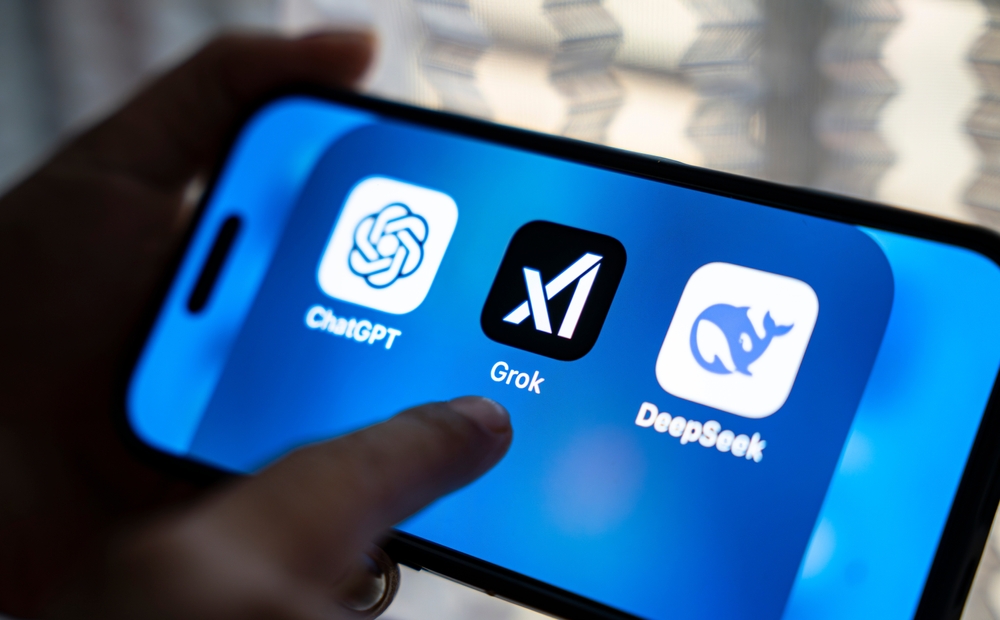
In an AI-mediated model, power shifts to whoever controls the interface. If you’re asking Siri or Google Assistant or some future AI layer to handle your tasks, the AI decides which services to use. The apps become suppliers; the AI becomes the storefront.
That’s an enormous shift. And it’s a big part of why the future of apps isn’t just a design question — it’s a power question.
So… Are Apps Actually Dying?
No. But they’re getting demoted.
Think of it like this: apps aren’t going away any more than engines went away when cars got self-driving features. The engine still matters — it’s just not the thing you interact with directly anymore.
Apps will keep doing what they do: processing payments, serving content, running complex features. But increasingly, they’ll do it behind the scenes, plugged into larger AI-driven systems rather than standing alone on your home screen.
For users, this shift might be almost invisible. You’ll still get your ride, your dinner, your bank balance. You just won’t have to think about which app gets you there.
The future of apps is less about what they can do and more about how quietly they can do it.
The Catch (Because There’s Always a Catch)
Before we all celebrate the dawn of a frictionless digital utopia, let’s talk about what we might lose.
Transparency goes down. When an AI picks your flight or your restaurant, how do you know it chose the best option and not the one that paid the most for placement? At least with apps, you can see the search results and make your own call.
Dependence goes up. Consolidating everything through a single AI interface means trusting that interface a lot. If it goes down, misunderstands you, or has a bias baked into its recommendations, you’ve got fewer alternatives readily at hand.
Discovery gets harder. Some of the best apps and services people use were found by browsing, stumbling across a recommendation, or just trying something new. In an AI-mediated world, if a service isn’t integrated into the system, it might as well not exist.
These aren’t reasons to resist the shift. But they’re reasons to shape it carefully.
What This Means If You Run a Business
If you’re building a product or running a company, the future of apps changes your playbook in a few important ways.
App downloads become less important. The traditional funnel — get users to discover your app, download it, create an account, and engage — gets compressed or bypassed entirely. If users are interacting through an AI layer, they might use your service without ever “opening” your app.
Integration becomes everything. Being pluggable into AI ecosystems matters more than having the prettiest icon on someone’s home screen. Your API, your data structure, your ability to play nicely with other services — that’s where the competition moves.
Value has to be undeniable. When an AI is choosing between services on a user’s behalf, the selection criteria become more functional and less emotional. Brand loyalty matters less when your customers never see your brand. The service itself has to be genuinely better.
The Bottom Line
The app model gave us an incredible decade-plus of innovation. It turned our phones into Swiss Army knives and made the internet feel like it fit in our pockets. That’s a genuine achievement.
But the model has reached a point where its structure creates as many problems as it solves. Too many apps, too much switching, too much friction for tasks that should be simple.
AI offers a way through — not by killing apps, but by changing our relationship with them. The future of apps is one where they work for the system rather than asking the system to work around them. Where you describe what you want, and the technology figures out the rest.
The most important app on your phone in five years might be the one you never have to open.