The chronically online test is an unusual kind of internet challenge: doing well may be more embarrassing than failing.
Instead of testing geography, history or whether you remember high-school algebra, these quizzes ask whether you understand phrases such as “touch grass,” “caught in 4K,” “the ick” and “main character energy.” They may also quiz you on forgotten memes, oddly specific online controversies or videos that dominated everyone’s feed for approximately three days.
Recognize everything immediately? Congratulations—you have apparently spent enough time online to earn a very unofficial diagnosis from the internet itself.
That self-own is the whole joke. Yet beneath the silly questions is a surprisingly useful idea. The test does not merely ask how many hours you stare at a screen. It asks how deeply the internet has moved into your language, habits and understanding of the world.
What Is the Chronically Online Test?
There is no single official test with one definitive set of questions. “The chronically online test” is better understood as a growing category of quizzes, videos and social challenges.
One popular format tests internet knowledge. A typical 20-question chronically online quiz includes questions about slang, memes, viral trends and platforms. You might have to explain what it means to get “ratioed,” identify the For You Page or know why telling someone to “touch grass” is not gardening advice.
Other versions are played between friends. One person reads out a list of phrases, sounds or names while everyone else tries to identify them. Some creators split the test into categories such as mainstream internet culture, fandom references, political discourse and ultra-niche memes. The deeper the test goes, the more confused the less-online participants become.
A second type focuses on behavior rather than trivia. It asks questions such as:
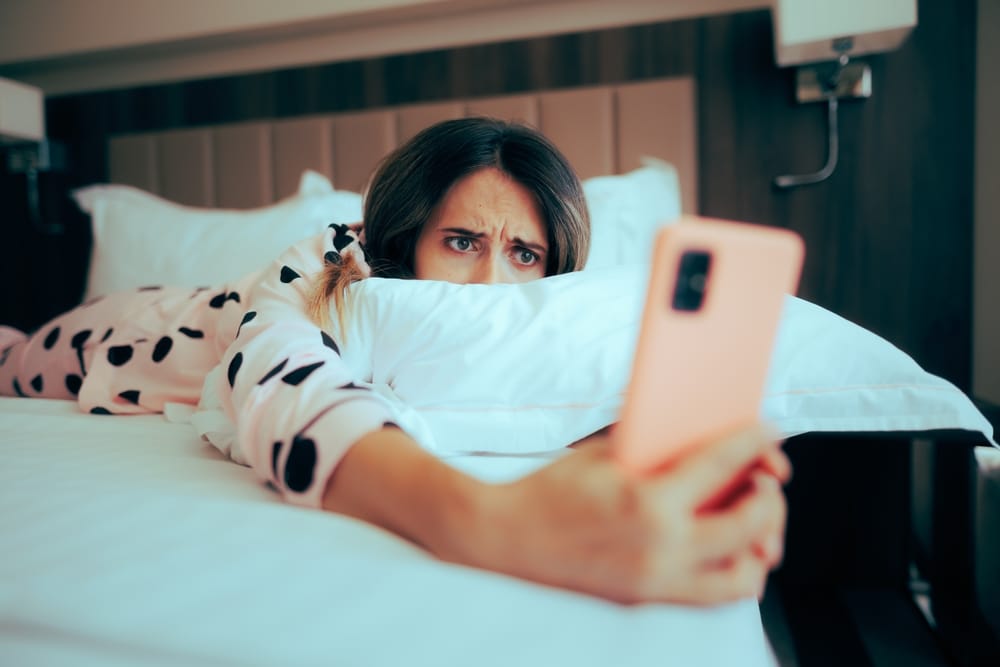
- Do you check notifications before getting out of bed?
- Have you followed an online argument involving people you do not know?
- Do you use internet slang in face-to-face conversations?
- Does being without your phone make you restless?
- Have you assumed a topic was universally important because it dominated your feed?
These versions come closer to measuring what the phrase actually means. Knowing a meme is harmless. Allowing a personalized feed to set your emotional weather is rather more significant.
What Does “Chronically Online” Actually Mean?
Being chronically online is not simply the same as using the internet frequently. Plenty of people spend most of the working day online because their jobs require it. Others use digital spaces to study, maintain friendships, find support or participate in hobbies.
The phrase usually describes someone whose immersion in internet culture has begun to distort how they communicate or interpret offline life. They may know every development in a niche controversy but struggle to explain why it matters. They may treat ordinary disagreements like public scandals or assume language used inside a small online community is understood everywhere.
The term is related to “extremely online” and “terminally online.” According to Know Your Meme’s history of the expression, versions of the idea circulated during the 2010s, while “chronically online” became increasingly common in the late 2010s and early 2020s. It has long been used both as an insult and as a self-deprecating confession.
That second use matters. Most people taking these tests are not seriously accusing themselves of losing contact with reality. They are laughing at the strange quantity of cultural clutter stored in their brains.
Why remember a password when you can remember the exact delivery of a six-second audio clip from 2021?
Why the Test Is Suddenly So Appealing
The format works because it turns an invisible habit into a score. Screen time can tell you that you spent two hours on an app, but it cannot show how much that app has changed your vocabulary or reference points.
A knowledge quiz can.
It also creates an easy social comparison. Friends, couples, siblings and colleagues can take the same test and discover that they effectively inhabit different versions of the internet. One person recognizes every reality-TV sound and celebrity meme. Another understands gaming references but has no idea what is happening on BookTok. A third person looks puzzled by everything and instantly becomes the healthiest-looking member of the group.
The tests also expose how fragmented online culture has become. Earlier internet jokes often spread across a relatively limited collection of big websites. Today, recommendation systems create highly personalized feeds. Two people can each spend hours on the same platform and encounter almost no overlap.
That makes the quiz both a test and a tour of somebody else’s algorithm.
There is another reason it feels timely: being online almost constantly is no longer an unusual lifestyle. In a 2024 survey, Pew Research Center found that nearly half of US teens said they were online almost constantly, up from 24% a decade earlier. That does not mean half of teenagers are unhealthy or disconnected from real life. It does show how difficult it has become to separate “online time” from ordinary time.

How to Tell Whether Your Result Means Anything
A high trivia score mainly proves that you know internet culture. It does not establish that you have an addiction, a mental-health condition or a dangerously unbalanced life.
The more useful questions concern control and consequences.
Can you stop scrolling when you intended to? Does online activity regularly delay sleep, work or basic tasks? Are you opening apps automatically, without deciding to? Do online arguments continue occupying your thoughts after you put down the phone? Has your feed made the outside world seem uniformly more hostile, dramatic or obsessed with a topic than it really is?
Those signs say more than whether you can define “delulu.”
Context also matters. Five hours spent working, video-calling relatives and learning a language is not equivalent to five hours of anxious scrolling. Even within social media, messaging close friends can feel very different from comparing yourself with strangers or repeatedly consuming distressing news.
This is why a viral quiz should be treated as entertainment with a possible side serving of self-reflection—not as a clinical assessment.
The Real Test: Has the Internet Started Running the Day?
If you want a more honest result, ignore meme knowledge for a moment and examine what happens around your screen use.
Start with mornings. Reaching for a phone is not automatically a problem, especially if it doubles as your alarm clock. But there is a difference between checking the time and becoming absorbed in other people’s emergencies before your feet touch the floor.
Then consider transitions. What do you do while waiting for the kettle, standing in a queue or sitting on public transport? If every small gap must be filled with content, your brain may have become uncomfortable with even brief periods of boredom.
Language offers another clue. Internet slang can be playful and efficient, but problems begin when ready-made labels replace thought. Calling every unpleasant person “toxic,” every awkward interaction a “red flag” and every disagreement “gaslighting” can flatten genuinely different situations into one dramatic online vocabulary.
Finally, test your sense of scale. Ask someone who is not immersed in your feed whether they have heard about the issue dominating it. The answer can be wonderfully deflating. Recommendation systems are excellent at making a small conversation feel like the only conversation happening.
What the Quiz Gets Wrong
The largest weakness is built into the name. “Chronically” sounds medical, but the term is slang. It should not be used to diagnose strangers or dismiss everything they say.
Someone may be highly informed about online culture because they work in marketing, entertainment, journalism or community management. A disabled or isolated person may rely on digital communities for connection. People in minority groups can find information and support online that are difficult to access locally. Being deeply online can provide friendships, creative opportunities and a genuine sense of belonging.
The test can also confuse cultural knowledge with harmful use. You may know every answer because friends send you memes—not because you spend six hours a night hunting through comment sections. Conversely, someone can recognize none of the references while still compulsively checking email, news or shopping apps.
Research on social media and wellbeing is more complicated than “screens bad, grass good.” Effects can vary according to the person, the platform, the content and the way it is used. The American Psychological Association’s guidance on healthier technology use emphasizes deliberate choices and personal boundaries rather than pretending technology can simply be removed from modern life.
How to Become Slightly Less Online Without Disappearing
You do not need to delete every account, buy a cabin or replace your smartphone with an object capable only of calling your dentist.
Begin by checking your actual usage data. Most phones record time by app, notifications and sometimes how frequently the device is picked up. Look for the apps you open most automatically—not only the ones with the highest total time.
Next, add a little friction. Remove the most tempting apps from the home screen. Turn off nonessential notifications. Log out after using a platform in a browser. Charge the phone outside the bedroom if late-night scrolling is disrupting sleep.
Create a few small spaces where content is not invited: the first 20 minutes after waking, meals, walks around the block or the final half-hour before bed. A narrow rule is easier to keep than announcing a grand “digital detox” and returning two days later to 86 notifications.
It also helps to replace the habit rather than leave an empty hole. Put a book beside the sofa. Download music before travelling. Call someone instead of silently watching their updates. Choose one longer article over an endless stream of summaries, reactions and reactions to the reactions.
Most importantly, notice how you feel after different kinds of use. The right question is not simply, “Was I online?” It is, “What did that time do to me?”
So, Are You Chronically Online?
The viral test is fun because it lets the internet grade people on how thoroughly they understand the internet. Its strangest achievement is making a terrible score feel admirable and a perfect score feel like a request for help.
But knowing memes does not make you chronically online. The clearer sign is that online culture has started controlling your attention, language, mood or sense of what matters.
Take the quiz, laugh at the result and enjoy discovering which friend speaks fluent algorithm. Then try the more meaningful test: put down your phone and see whether you immediately reach for it again.