For years, foldable phones felt like expensive public beta tests. They were thick, fragile, awkwardly shaped and often worse than ordinary smartphones at basics such as battery life and photography. Buying one required equal parts enthusiasm and forgiveness.
That has changed. The latest generation is slimmer, lighter and considerably more practical. Cover screens are no longer glorified notification panels, hinges feel less experimental, water resistance has improved and Android now handles large, changing screen sizes far more gracefully.
Foldables have finally grown up. The harder question is whether growing up has made them sensible purchases—or merely better luxury gadgets.
First, Decide Which Kind of Foldable You Want
“Foldable” describes two quite different products.
A flip-style phone starts at roughly the size of a conventional smartphone and folds into a compact square. Its main advantage is portability. It fits more easily into a small bag or pocket, while its outer screen handles quick tasks without requiring you to open the phone.
A book-style foldable works the other way around. Closed, it behaves like a normal phone. Open it, and you get a small tablet. This format is designed for reading, video, games, document editing and running multiple apps side by side.
That distinction matters because neither design is automatically better than a standard phone. A flip phone is worth considering if you genuinely want something smaller when carried. A book-style model makes sense if you frequently wish your phone had more working space.
If neither benefit sounds useful, the hinge is mostly an expensive party trick.
The Hardware No Longer Feels Like a Prototype
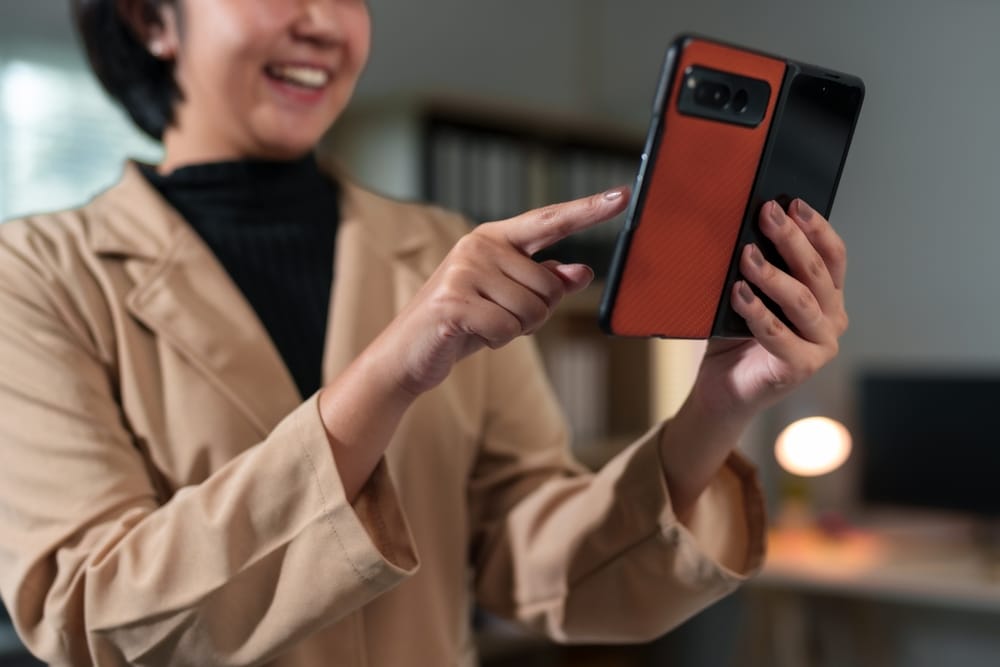
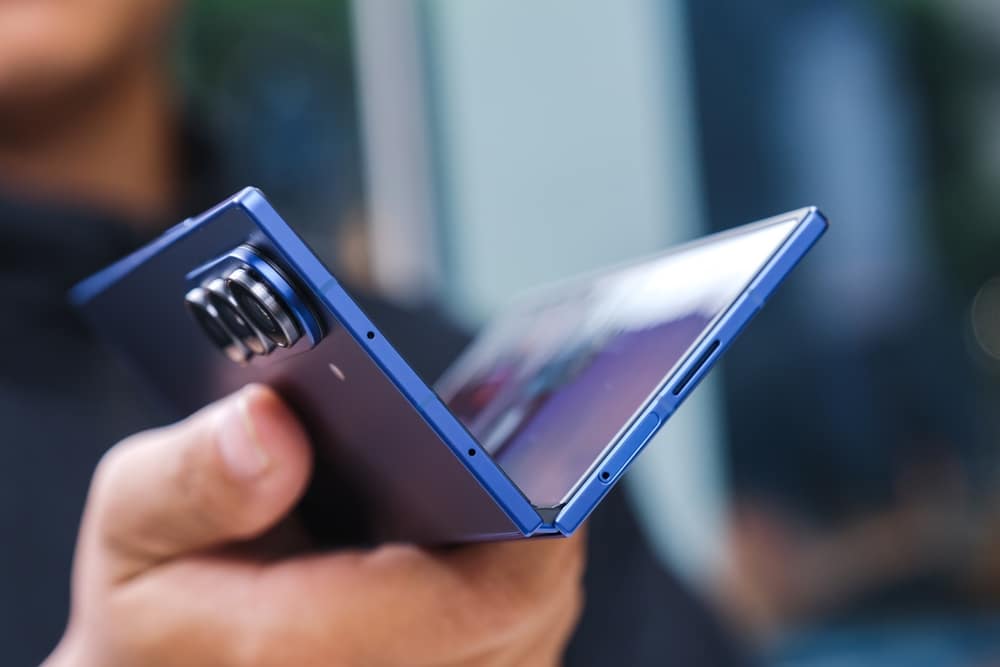
Early foldables asked buyers to tolerate bulky bodies, narrow outer displays and visible gaps when closed. Newer models look and behave much more like finished consumer products.
Samsung’s current Galaxy Z Fold8, for example, weighs 201 grams—within the range of many conventional premium phones—while opening to a 7.6-inch internal display. Its 5.5-inch outer screen has an unusual, compact shape, but it is intended to function as a proper everyday display rather than an emergency backup.
Larger book-style models have also become surprisingly thin. Google lists the Pixel 11 Pro Fold at 10.1 millimetres when closed and 5 millimetres when open. Motorola’s Razr Fold is listed at 9.89 millimetres closed. Add a substantial case and these devices are still chunky, but the old “two phones taped together” comparison is no longer entirely fair.
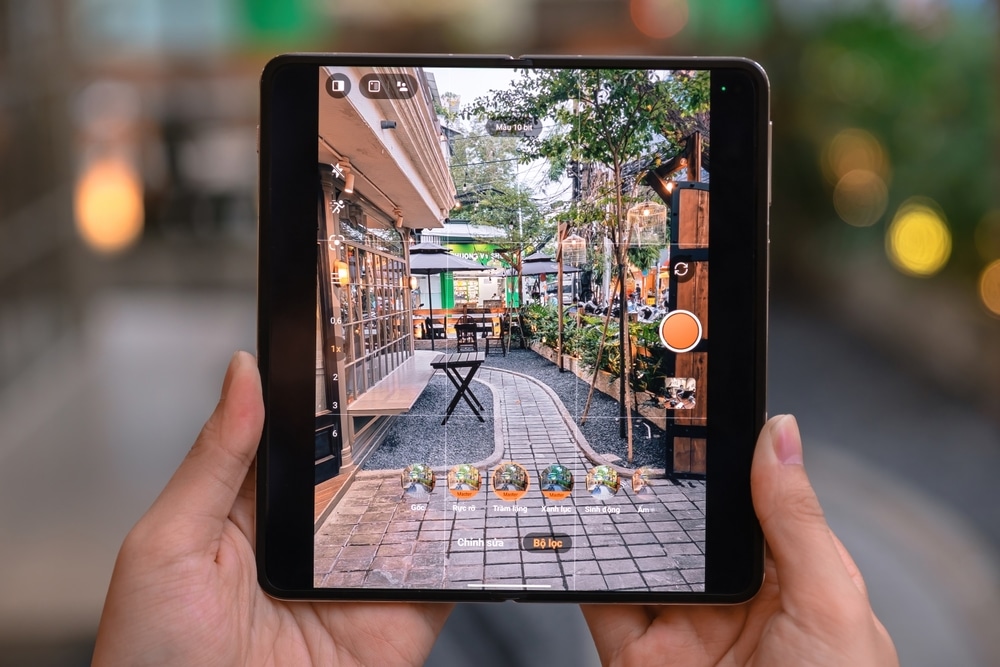
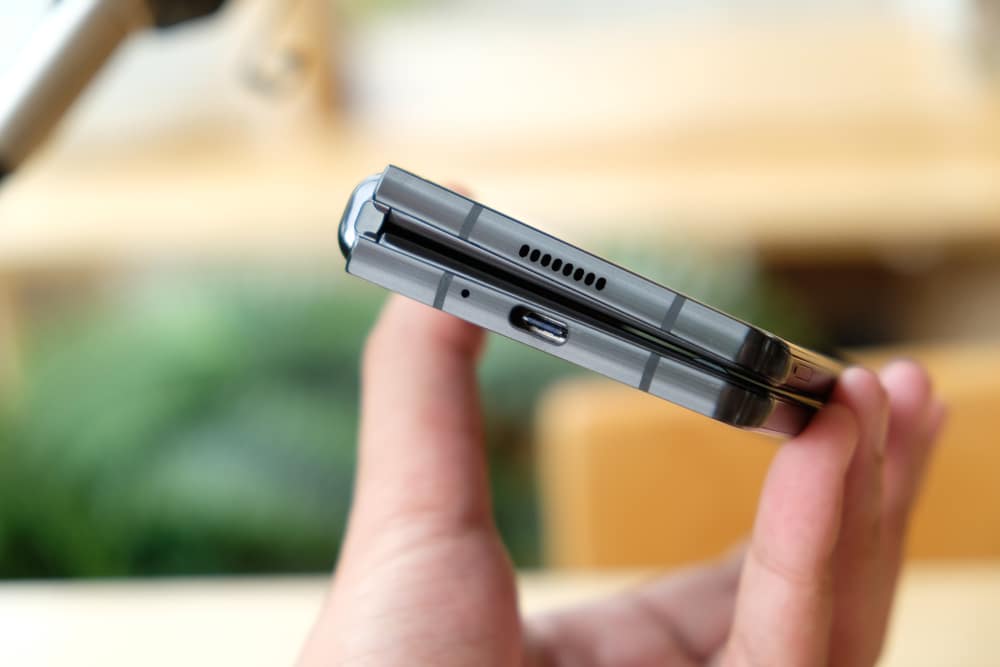
Hinges have improved too. Current designs generally close flat, hold the screen at useful angles and require less wrestling to open. That halfway-open position is more useful than it sounds: the phone can become its own stand for video calls, group photos, time-lapse recording or watching a video on a table.
The crease has not disappeared. You can usually see it under reflections and feel it while swiping across the middle. However, it tends to fade from attention when viewing content straight on. Whether it bothers you is highly personal, which is one reason a foldable should be handled in a shop before purchase.
The Outer Screens Are Finally Useful
A foldable becomes annoying very quickly if every small task requires opening it.
Modern flip phones solve much of that problem with larger cover displays. Depending on the model, you can check notifications, control music, read messages, view directions, use timers and frame photos with the phone still closed. Some allow full apps; others rely more heavily on widgets or a limited selection of approved software.
That difference is worth investigating before buying. A large outer display does not guarantee that your banking app, messaging service or navigation app will work properly on it.
Book-style devices have made a different improvement: their cover screens increasingly resemble normal phone displays. Earlier models could feel unusually tall and narrow, making typing cramped. Recent designs offer more conventional proportions, allowing owners to use the outside screen for routine tasks and save the internal display for occasions when it adds something.
This two-screen rhythm is what makes a mature foldable pleasant. You should not have to unfold it to reply to every message—but you should want to unfold it when reading a long article, reviewing a document or planning a route.
The Big Screen Now Has a Real Purpose
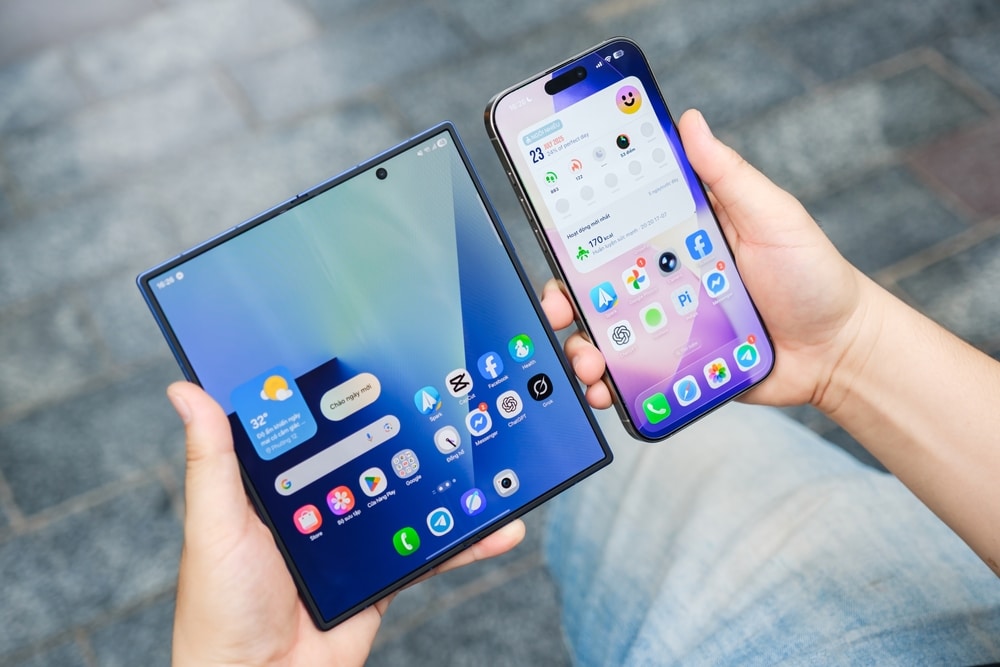
The strongest argument for a book-style foldable is not watching enormous TikTok videos. It is the ability to see more information at once.
Maps can show directions alongside a broader view of the surrounding area. Email can display an inbox and an open message together. A browser and note-taking app can sit side by side. Photos are easier to inspect and edit. Digital books and magazines feel far less cramped than they do on a narrow phone.
Multitasking is particularly useful when the two apps are related. You might compare a hotel with its location on a map, move information from an email into a calendar, or follow instructions while keeping a video call open. It will not replace a laptop for complicated work, but it can prevent plenty of minor tasks from becoming laptop jobs.
App support is also much better than it once was. Google’s current Android guidance for foldables specifically covers changing screen states, tabletop and book postures, picture-in-picture, multi-window use and running multiple app instances.
That does not mean every app is beautifully optimized. Some still stretch a phone interface across the entire display, leave empty space or restart when the device is opened. Games and videos may also display large black bars because a foldable’s nearly square internal screen does not match their aspect ratio.
The software problem has shrunk, but it has not vanished.
Durability Is Better, Not Worry-Free
Modern foldables are much easier to trust around normal daily life. Stronger frames, improved hinges and better water resistance have removed some of the anxiety that surrounded early models.
Samsung gives its latest Fold and Flip models an IP48 rating. Google goes further by listing the Pixel 11 Pro Fold as IP68, while Motorola lists both IP48 and IP49 ratings for its Razr Fold.
Those numbers require context. An IP rating does not make a phone indestructible, and water resistance can deteriorate through wear or damage. An IP48 device is also not fully dust-tight. Fine sand, workshop dust and beach bags remain less friendly environments for a hinge than they are for a sealed conventional phone.
The internal display is still the most vulnerable part. It needs to bend, so it cannot use the same thick protective glass as an ordinary screen. Manufacturers combine flexible materials with ultra-thin glass and a factory-fitted protective layer, but the result is still easier to mark or damage with pressure.
Do not remove the built-in screen protector unless the manufacturer specifically instructs you to do so. Avoid pressing the display with a fingernail, trapping debris before closing it or carrying the phone loose beside keys. These are not impossible demands, but they are extra rules that an ordinary phone does not impose.
You Still Pay More and Sometimes Receive Less
Foldable pricing remains the biggest obstacle.
Flip phones are increasingly available near conventional flagship territory, especially after promotions or when buying the previous generation. Large book-style models still sit at the premium end of the market; Google’s Pixel 11 Pro Fold, for instance, launched in Europe from €1,999.
The frustrating part is that a higher price does not always buy the best specifications. Foldables must reserve internal space for a hinge, two screen sections and a split battery. That can create compromises in battery capacity, charging speed, camera hardware or heat management.
Some book-style models now offer excellent cameras and large batteries, but the same money can often buy a top conventional phone with stronger zoom performance, fewer durability concerns and money left over for a tablet. Flip phones may also use less ambitious camera systems than similarly priced rigid phones.
Repair risk deserves equal attention. Replacing a flexible internal display can be far more expensive than repairing a normal screen. Manufacturer protection plans may reduce the bill, but coverage, excess fees and accidental-damage rules vary by country.
Before ordering, check the actual local price for an out-of-warranty inner-screen replacement. If that figure would make you afraid to use the phone, include accidental-damage cover in your budget—or buy something else.
Battery Life Is No Longer Automatically Bad
A few generations ago, weak endurance was almost expected from a foldable. Today, battery performance varies too much for that blanket warning to remain fair.
Manufacturers are fitting larger cells into thinner bodies, while more efficient displays and processors help reduce consumption. Google lists a 4,806mAh typical battery in the Pixel 11 Pro Fold, while Motorola’s Razr Fold uses a 6,000mAh unit. Capacity alone cannot predict real-world endurance, but it shows how far the category has moved beyond tiny batteries squeezed around oversized hinges.
Usage still matters. Spending hours on the large inner display draws more power than checking messages on the cover screen. Multitasking, gaming, high brightness and poor mobile reception can quickly eat through a charge.
Do not assume “foldable” means poor battery life, but do check tests for the exact model you are considering. Two devices with similar shapes can perform very differently.
Who Should Actually Buy One?
A book-style foldable is now a credible choice for frequent travellers, mobile workers, heavy readers and anyone who regularly uses split-screen apps. It is especially appealing if it can replace a small tablet you would otherwise carry.
A flip phone suits someone who values portability, likes using a phone less deliberately or wants a proper camera preview when taking selfies with the rear cameras. Closing the device also creates a clear physical end to an interaction, although that benefit depends on resisting the outer screen.
A conventional phone remains the smarter purchase for people who prioritize maximum camera quality, simple repairs, ruggedness or value. It is also better for anyone working around sand, dust, tools or other conditions that are rough on moving parts and softer screens.
Buying last year’s foldable can be an excellent compromise because these devices often receive substantial discounts. Just inspect used or refurbished examples carefully. Look for lifting around the screen protector, hinge noises, dead pixels, dents near the hinge and inconsistent opening. Confirm the remaining warranty and test both displays before the return window closes.
A Five-Minute Test Before You Buy
Do not judge a foldable from specifications alone. In a shop, type a full message on the cover screen, open your most-used apps and rotate the internal display. Try holding it one-handed while closed. Check how visible the crease is under bright lighting and whether the hinge feels comfortable to open repeatedly.
Then put it in your pocket.
That final test catches a surprising number of problems. A phone can look impressively thin on a product page yet feel awkward once its camera bump and case are included.
So, Are Foldable Phones Worth It Now?
Yes—but only when the fold solves a real problem for you.
Today’s foldable phones are no longer fragile curiosities that require constant excuses. They can be thin, water-resistant, powerful and genuinely useful, with software that finally understands their unusual screens. A good flip phone delivers compactness without sacrificing normal smartphone use, while a good book-style model places a capable mini-tablet in your pocket.
The remaining disadvantages are substantial: high prices, costly repairs, softer internal displays, visible creases and occasional app awkwardness. For most buyers, a conventional phone still offers better value.
But if you will regularly use the compact folded shape or the expansive inner screen, foldables have finally reached the point where choosing one is not merely adventurous. It can be entirely practical.