
The internet promised us freedom. Work from anywhere. Build passive income. Reach millions with a click. Yet for many people, online life feels anything but free. Notifications never stop. Algorithms demand constant content. Hustle culture tells us to wake up earlier, post more, scale faster. In response to this pressure, a new idea called slow productivity is gaining attention. Instead of chasing endless output, it asks a simple question: what if doing fewer things, more deliberately, actually leads to better results? This article explores how working slower online might be the smartest move you can make.
What Is slow productivity and Why Is It Trending?
At its core, slow productivity is a philosophy that focuses on meaningful work instead of maximum output. The term was popularized by computer science professor and author Cal Newport, who argues that knowledge workers produce higher quality results when they concentrate deeply on fewer tasks over longer periods.
Unlike traditional productivity advice, which often emphasizes speed, multitasking, and optimization hacks, slow productivity encourages depth, patience, and intentional effort. It suggests that cognitive work, such as writing, coding, designing, or strategizing, improves when distractions are minimized and timelines are realistic.
The rise of slow productivity is not random. Burnout rates are increasing, especially among remote workers and digital entrepreneurs. Studies from organizations like the World Health Organization have linked chronic workplace stress to serious mental and physical health consequences. In an always-on digital world, people are searching for sustainable ways to work, and slow productivity offers a compelling alternative.
The Problem With Always-On Online Work
The digital economy rewards visibility. Post daily. Reply instantly. Publish more. The logic seems simple: more content equals more growth. But this model often leads to shallow work and mental fatigue.
Many creators and professionals operate in reaction mode. Emails, Slack messages, comments, and trending topics constantly interrupt focus. Research from cognitive psychology shows that task switching reduces efficiency and increases errors. Each interruption forces the brain to refocus, which consumes mental energy.
This is where slow productivity becomes powerful. By deliberately reducing commitments and protecting focus time, professionals can create higher-quality output. Instead of juggling ten projects, slow productivity encourages choosing two or three that truly matter. Over time, this selective approach often leads to stronger reputations and more sustainable growth.
Another issue with constant online activity is diminishing returns. Publishing daily does not guarantee impact. In fact, thoughtful weekly content can outperform rushed daily posts. Slow productivity shifts the focus from quantity metrics to long-term value, helping creators escape the pressure of constant performance.
Doing Less, But Better
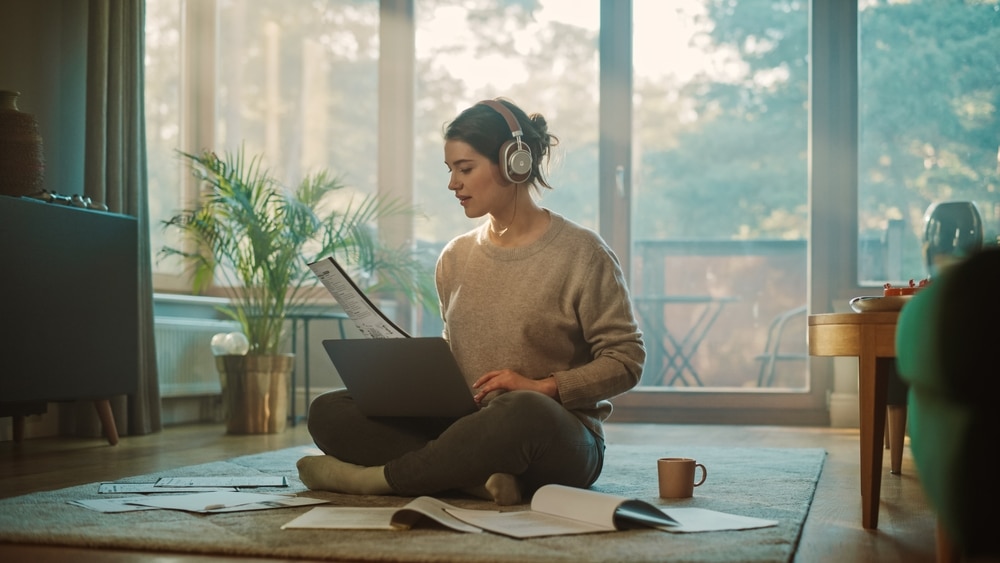
One of the main principles behind slow productivity is intensity over volume. Rather than filling your day with small tasks, you dedicate significant blocks of time to one meaningful objective.
For example, a blogger might spend three uninterrupted hours crafting a deeply researched article instead of quickly publishing short, surface-level posts every day. A developer might focus on refining one feature instead of rushing to release multiple unfinished updates.
Slow productivity works because complex tasks require deep thinking. Neuroscience research shows that focused attention strengthens neural pathways associated with learning and creativity. When we protect our attention, we improve the quality of our decisions and ideas.
In practical terms, slow productivity often means:
- Limiting the number of active projects
- Setting longer timelines
- Reducing unnecessary meetings
- Creating distraction-free work blocks
This approach may feel uncomfortable at first. Many people equate busyness with importance. But slow productivity challenges that assumption by redefining success around impact rather than activity.
The Science Behind Deep Focus
The effectiveness of slow productivity is supported by decades of research on attention and performance. Psychologist Mihaly Csikszentmihalyi’s concept of “flow” describes a mental state where individuals are fully immersed in a task. In flow, productivity and satisfaction both increase.
Flow states are nearly impossible when multitasking. Constant interruptions prevent the brain from entering deep concentration. Slow productivity deliberately structures work to make flow more likely.
Additionally, studies on deliberate practice show that expertise develops through focused, challenging work combined with rest. Elite performers in music, sports, and academics rarely practice endlessly. Instead, they train in structured, high-quality sessions. Slow productivity applies this same principle to digital work.
Rest is also essential. Research on recovery and performance demonstrates that breaks improve long-term output. By building downtime into schedules, slow productivity protects cognitive capacity. It recognizes that the brain is not a machine designed for nonstop output.
Redefining Success in the Digital Age
Online culture often celebrates rapid growth stories. Viral posts. Overnight success. Six-figure launches. These stories are compelling, but they are not the norm. Sustainable careers are usually built slowly.
Slow productivity encourages professionals to measure success differently. Instead of asking, “How much did I produce today?” the better question becomes, “Did I make meaningful progress on what matters most?”
This shift reduces anxiety. When you adopt slow productivity, you accept that important work takes time. You stop chasing every opportunity and start choosing strategically. Over months and years, this consistency compounds.
There is also a reputational advantage. High-quality work builds trust. Audiences notice depth. Clients appreciate thoroughness. In competitive online markets, slow productivity can become a differentiator because it leads to thoughtful output instead of rushed noise.
Importantly, slow productivity does not mean laziness. It is not about avoiding effort. It is about directing effort wisely. The goal is sustained excellence, not short bursts of unsustainable hustle.
Practical Ways to Apply It Online
Adopting slow productivity does not require quitting your job or abandoning ambition. It starts with small structural changes.
First, audit your commitments. List all ongoing projects and responsibilities. Then ask which truly align with your long-term goals. Slow productivity often begins by eliminating or delegating low-value tasks.
Second, schedule deep work sessions. Block specific hours for focused creation. Turn off notifications. Close unnecessary tabs. Treat these sessions as appointments you cannot miss. Slow productivity thrives when attention is protected.
Third, create realistic timelines. Many online entrepreneurs underestimate how long meaningful work takes. By doubling estimated timelines, you reduce stress and improve quality. This is a core habit within slow productivity.
Fourth, build recovery into your routine. Take walks. Step away from screens. Protect sleep. Sustainable output depends on energy management. Slow productivity recognizes that rest is productive when it supports better work later.
Finally, communicate boundaries. Let clients and collaborators know your response times and availability. Clear expectations reduce reactive pressure and make slow productivity possible in collaborative environments.
The Long-Term Advantage
The biggest benefit of slow productivity may not be immediate efficiency. It is longevity. Burnout forces many talented people to quit promising paths. By pacing yourself, you increase the likelihood of staying in the game.
Online platforms constantly evolve. Algorithms change. Trends fade. Those who endure are often the ones who adapt calmly and think strategically. Slow productivity supports this adaptability because it prioritizes learning and reflection over frantic output.
There is also a personal benefit. Work becomes more satisfying when it is not rushed. Craft improves. Confidence grows. Slow productivity allows professionals to take pride in what they produce instead of constantly worrying about the next post, launch, or metric.
Over time, small, focused efforts compound into significant achievements. A well-researched article can attract readers for years. A carefully built product can generate steady income without constant updates. Slow productivity builds assets, not just activity.
In a culture obsessed with speed, choosing patience can feel rebellious. But it may also be the smartest competitive strategy available in the digital world.
The slow productivity movement is not about rejecting ambition. It is about aligning ambition with sustainability. When you focus on fewer, higher-quality tasks, you protect your energy and sharpen your skills. You create space for deep thinking in a noisy online world. Most importantly, you build a career or business that can last. The internet will continue to reward value, insight, and originality. By embracing slow productivity, you give yourself the time and attention needed to produce exactly that, without sacrificing your well-being along the way.
Do you want to learn more helpful tools to increase your digital productivity? Than you will find the category page here